Stainless Manual Dicer: Fast 1/4″ & 3/8″ Cubes
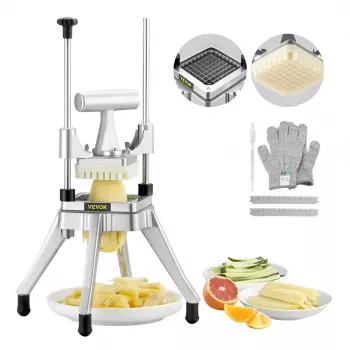
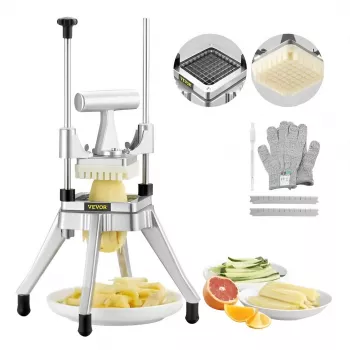
Commercial Manual Vegetable & Fruit Dicer Cutter (Stainless Steel, 3/8″ & 1/4″)
Fast, uniform cuts can make prep work smoother in busy kitchens. A manual stainless-steel dicer delivers consistent cubes for salads, salsas, soups, and garnishes—without needing electricity—while helping reduce hand fatigue compared to repetitive knife work. For teams that value speed, repeatability, and simple cleanup, a sturdy lever-style dicer can quickly become a daily driver at the prep table.
What This Dicer Is Best For
A commercial-style manual dicer is built for repeat cycles: load, press, repeat. It shines when you need neat cubes that look consistent on the plate and cook at the same pace on the line.
- Quick dicing of common prep items such as onions, tomatoes (firmer varieties), cucumbers, potatoes, apples, and more
- Consistent cube sizes for portion control, presentation, and even cooking
- Small restaurants, catering, food trucks, concessions, and high-volume home cooking
- Operations that prefer manual tools over plug-in equipment for portability and simpler setup
It’s especially handy when you’re producing a lot of the same cut—like onions for a lunch rush, potatoes for breakfast service, or apples for a salad bar—where uniformity matters as much as speed.
Stainless Steel Build and Manual Leverage
Stainless steel is a practical choice in prep environments because it stands up to frequent washing and contact with acidic foods. A lever-driven cutter also changes the feel of the work: instead of muscling through with a knife for every cube, you apply controlled pressure through the handle to push produce across the grid.
- Stainless-steel construction supports frequent use and helps resist corrosion from acidic foods and washing
- Manual lever action increases cutting force with less effort than pushing directly through with a knife
- Stable base design helps keep the cutter steady during repeated cycles
- Suitable for prep stations where an outlet is not convenient or where noise/space should be minimized
For sanitation-minded kitchens, it also helps to follow recognized guidance for cleaning and safe handling. The USDA’s “Clean” basics are a solid refresher for keeping prep surfaces and tools sanitary: USDA Food Safety and Inspection Service — Kitchen Companion: Clean. For broader retail food safety standards, the FDA Food Code (2022) is a helpful reference.
Two Cube Sizes: 3/8″ and 1/4″
Having two grid sizes is more than a nice extra—it’s a way to keep your menu output consistent without changing your entire prep routine. Use the larger grid when you want a more substantial bite, and switch to the smaller grid for refined toppings and tidy garnish work.
- 3/8″ cubes work well for heartier soups, stews, breakfast potatoes, and chunky salsa
- 1/4″ cubes suit finer garnishes, salad toppings, and more delicate presentation
- Swapping grid sizes can help standardize output for different menu items without changing workflow
- Uniformity supports predictable cook times and reduces the number of over/under-cooked pieces
Choosing a Cube Size for Common Tasks
| Use case | Recommended cube size | Notes |
|---|---|---|
| Salsa/pico de gallo (chunky) | 3/8″ | Keep produce firm and well-chilled for cleaner cuts |
| Soup mirepoix-style prep | 3/8″ | More presence in the bowl; holds shape better |
| Salad toppings | 1/4″ | More bites per serving; distributes evenly |
| Garnish and fine prep | 1/4″ | Good for consistent presentation |
| Home fries / breakfast potatoes | 3/8″ | Cooks evenly; less likely to fall apart |
How to Use for Cleaner Cuts
Great dicing results start before the lever press. A few small habits can dramatically reduce cracking, wedging, and “mushed” edges—especially with softer produce.
- Trim ends and create flat sides on round produce so it sits securely against the grid
- Cut large items into halves or quarters to match the chute area and avoid forcing
- For softer items, chill briefly to firm the flesh and reduce crushing
- Use steady, continuous lever pressure rather than quick jolts to limit cracking and uneven edges
When working with potatoes or other starchy ingredients, a quick rinse of the grid between batches can prevent starch buildup that may drag on the next press.
Safety and Comfort Tips
Because the grid is sharp and designed to cut efficiently, safe setup and hand placement matter as much as technique. The goal is stable footing for the tool and predictable movement for the user.
- Keep hands away from the grid and blades; use the pusher mechanism as intended
- Set up on a stable surface; avoid overhanging edges that can cause rocking
- Do not overload with oversized pieces—pre-cutting reduces risk and improves consistency
- Wear cut-resistant gloves during blade handling and cleaning, especially around the grid
If multiple people share the station, a quick “reset” routine—wipe down, confirm grid seated, confirm pusher alignment—helps keep output consistent and reduces surprise resistance on the next push.
Cleaning and Maintenance
When a Manual Dicer Makes More Sense Than Electric
Product Snapshot
- Commercial Manual Vegetable Fruit Dicer Cutter 3/8″ & 1/4″ Stainless Steel — designed for fast, repeatable dicing with two cube-size options
- Save Smart, Stress Less: Your Monthly Savings Calculator Guide — a simple way to map out purchasing plans for kitchen upgrades and recurring supply costs
FAQ
Can it dice soft items like tomatoes without turning them to mush?
Yes—when tomatoes are firm and you use steady pressure. Chill them briefly, avoid overripe produce, and don’t force oversized pieces; very soft fruit can still crush instead of cutting cleanly.
What’s the difference between the 3/8″ and 1/4″ grids in everyday prep?
The 3/8″ grid makes chunkier cubes for soups, stews, breakfast potatoes, and hearty salsas. The 1/4″ grid produces finer cubes that distribute more evenly for salad toppings and garnishes.
How should the blade grid be cleaned safely?
Rinse promptly after use, then use a soft brush to clear the lattice. Handle the grid carefully (cut-resistant gloves help) and dry thoroughly to keep the metal and moving parts in good shape.













Leave a comment