Pet Calming Scent Checklist: Safe, Simple Routine
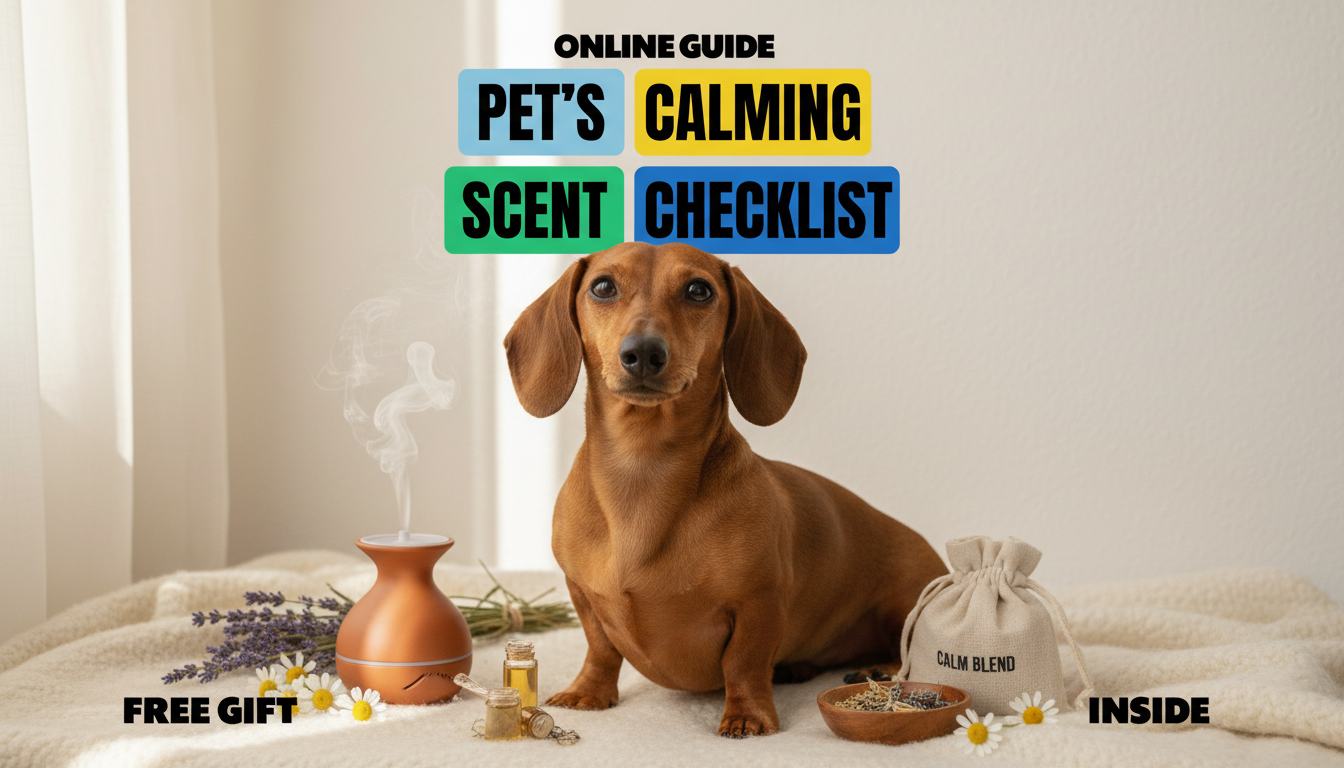
Pet’s Calming Scent Checklist: A Gentle, Practical Guide for Dogs and Cats
Some pets relax with familiar, mild scents; others become overwhelmed by strong fragrances. A calming scent routine works best when it’s simple, consistent, and safety-first—especially for cats, who can be more sensitive to many aromatic compounds. The goal is not to “cover up” stress, but to support calmer settling with low-intensity cues you can repeat for everyday downtime, travel, and noisy events.
When a calming scent routine can help
Calming scent support can be useful when stress is predictable or recurring, such as:
- Thunderstorms, fireworks, construction noise, or loud neighbors
- Guests, grooming, crate time, vet visits, or carrier time
- Separation, moving, adding a new pet, or changes to the household routine
Typical anxiety signals in dogs include pacing, panting, whining, trembling, destructive behavior, excessive licking, hiding, or refusing food. In cats, stress may show up as hiding, over-grooming, litter box changes, vocalizing, reduced appetite, aggression, or freezing. If scent support helps, you’ll usually see “faster recovery” and “easier settling,” not a completely stress-free pet overnight.
Scent routines work best as one piece of a broader plan: a quiet space, predictable schedule, enrichment, gentle training, and veterinary guidance when needed. Immediate red flags that call for veterinary help include sudden behavior change, trouble breathing, vomiting/diarrhea, collapse, uncontrolled shaking, or signs of pain.
Safety first: what “pet-friendly” really means
“Pet-friendly” should mean low exposure, low concentration, and low risk—plus the ability for your pet to opt out.
- Avoid direct application to fur or skin unless a veterinarian specifically recommends a pet-formulated product.
- Never force exposure. Pets should always be able to leave the scented area.
- Diffusers and essential oils can be risky—especially for cats. Many concentrated oils are not appropriate in homes with pets.
- Start with low-intensity options in well-ventilated spaces. A scent that seems faint to humans can be strong to pets.
- Keep hazards away: oil bottles, reeds, potpourri, wax melts, and plug-ins that can spill or be chewed.
- If irritation appears (sneezing, coughing, watery eyes, drooling, lethargy, vomiting), stop exposure, ventilate, and contact a veterinarian or poison helpline.
For additional safety guidance, review resources from ASPCA Animal Poison Control and Pet Poison Helpline.
Step-by-step: how to introduce calming scents without overwhelming your pet
- Change one thing at a time. Test only one scent approach for 2–3 days before adding anything new.
- Pick a neutral moment. Introduce the cue when your pet is already calm—not in the middle of fireworks or a panic episode.
- Create an “opt-out” zone. Keep at least one room completely unscented, with a clear path to leave the scented area.
- Pair with calm habits. Try low lights and white noise. For dogs, add a chew or lick mat; for cats, add play followed by a small food puzzle.
- Track before-and-after behavior. Note resting time, startle response, vocalizing, appetite, and willingness to settle.
- Use short sessions. Start with 5–10 minutes, then extend only if your pet remains relaxed (soft body, normal breathing, chooses to stay nearby).
If you’re unsure what “anxiety” looks like in dogs, the American Kennel Club (AKC) provides helpful general education on stress signals and behavior patterns.
Calming scent checklist: quick reference table
Scent Routine Tracker (Print + Repeat)
| Option tested | How it’s used (low intensity) | Best timing | What to watch for | Result (helped / neutral / worse) |
|---|---|---|---|---|
| Familiar bedding or unwashed blanket | Place in safe bed/crate area; keep clean but retain familiar odor | Daily rest, travel, vet carrier | Settling speed, pacing, hiding | |
| Pheromone product (species-specific) | Follow label directions; place away from food/water and where pet can leave | 1–2 days before known triggers | Reduced vocalizing, fewer startle reactions | |
| Mild herbal sachet (pet-safe, enclosed, out of reach) | Keep sealed; place nearby (not inside) bed area; remove if chewed | Quiet time, bedtime | Sniffing + relaxing vs. sneezing/avoidance | |
| Clean-air routine (no added fragrance) | Ventilate, HEPA filter, remove strong cleaners and sprays | Always; especially for sensitive pets | Better breathing, calmer resting | |
| Scent cue paired with a calm routine | Same gentle cue before relaxing activity (mat training, puzzle feeder) | Before guests, before leaving home | Faster settle on cue over time |
For a ready-to-print version you can reuse for each trigger (travel, guests, storms), see Pet’s Calming Scent Checklist (digital download).
Building a “calm kit” for travel, vet visits, and noisy events
Common mistakes that make scent-based calming less effective
A printable checklist that keeps the process simple
If organizing routines helps reduce human stress too, a simple planning tool can keep pet-care costs predictable over time, such as Save Smart, Stress Less: Your Monthly Savings Calculator Guide. For mindset and habit-building support, Train Your Mind to Think Like a Millionaire (digital workbook) can complement a consistent, routine-focused approach at home.
FAQ
Are essential oils safe to use around dogs and cats?
Many essential oils can be harmful, especially to cats, and concentrated diffusers can create risky exposure. Avoid direct application and strong, continuous diffusion, and ask a veterinarian before using any aromatic product around pets.
How long does it take to know if a calming scent routine is helping?
For mild options, look for changes across a few short sessions over 2–3 days, such as faster settling, less pacing, and improved rest. Pheromone-style products and learned routines may need a longer, consistent trial to see clearer patterns.
What should be done if a pet sneezes, drools, or seems worse after introducing a scent?
Stop exposure immediately, ventilate the area, and prevent any further contact with the product. Monitor symptoms closely and contact a veterinarian or a pet poison resource right away if signs persist, worsen, or seem severe.















Leave a comment