Zero-Based Budgeting System: Save More, Pay Off Debt
Budgeting Like a Pro: A Simple System for Zero-Based Budgets, Debt Payoff, and Steady Savings
A workable budget does more than track spending—it assigns every dollar a job, builds momentum with small wins, and protects priorities like saving and debt reduction. The most reliable setup is one you can repeat every month: start with real numbers, plan for irregular costs, automate progress, and use a clear debt payoff method that keeps you motivated.
Start with the numbers that matter (income, bills, and true expenses)
Before any categories or apps, get the inputs right. List all income sources and, if your pay varies, budget from a conservative baseline—often the lowest month you’ve had recently. That way, a “normal” month creates extra breathing room instead of a shortfall.
Next, separate your fixed bills (rent/mortgage, utilities, insurance, minimum debt payments) from flexible spending (groceries, fuel, dining, entertainment). This makes it easier to see what can actually change in the short term.
Finally, add “true expenses”: costs that don’t show up monthly but are guaranteed to happen—car repairs, annual subscriptions, gifts, medical copays, and anything billed quarterly or semiannually. Convert them into monthly set-asides so they stop feeling like surprises.
| Expense | How often | Typical cost | Monthly amount to set aside |
|---|---|---|---|
| Car maintenance | Yearly | $600 | $50 |
| Gifts & holidays | Yearly | $480 | $40 |
| Insurance premium gap | Twice a year | $300 | $50 |
| Medical out-of-pocket | Yearly | $360 | $30 |
To keep the process focused, pick one primary goal for the next 30–90 days: build a starter emergency fund, stop overdrafts, or reduce high-interest debt. One clear target makes daily decisions simpler.
Use zero-based budgeting to assign every dollar a job
Zero-based budgeting means your income minus allocations equals zero—zero left unassigned, not zero left in the bank. Some dollars are “spent” this month; others are “assigned” to upcoming expenses, savings, or extra debt payments.
Start by funding essentials first: housing, utilities, basic groceries, transportation, minimum debt payments, and required insurance. Then fund your true-expense categories (often called sinking funds) so irregular bills don’t knock you off course.
If the math doesn’t work, adjust in this order:
- Reduce wants (the fastest lever to pull).
- Renegotiate bills (shop insurance, ask for promotions, downgrade plans).
- Increase income (extra shifts, selling unused items, a side gig).
- Reconsider large fixed commitments (housing and car costs, if needed).
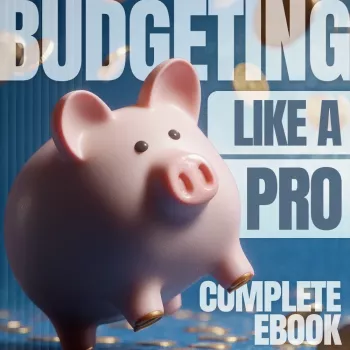
For step-by-step templates that make this setup faster, a structured planner can help keep categories, bill due dates, and sinking funds in one place. The Budgeting Like a Pro: Complete eBook – Personal Finance Planner is built around zero-based budgeting with savings and debt trackers to support consistent follow-through.
Keep 50/30/20 as a compass (not a rule)
The 50/30/20 guideline is useful as a quick check: needs (around 50%), wants (around 30%), and saving/debt goals (around 20%). It’s not a pass/fail test—more like a compass that shows where things are drifting.
If needs exceed 50%, focus on stabilizing. Look for recurring savings first: reduce subscriptions, switch providers, adjust deductibles thoughtfully, or trim convenience spending that quietly inflates “needs.” If wants exceed 30%, try a short spending freeze on one category (like eating out or online shopping) for two weeks. A short reset tends to feel more doable than “never again.”
To estimate realistic monthly savings targets without guessing, the Save Smart, Stress Less: Your Monthly Savings Calculator Guide can help translate a goal into a monthly number you can actually fund.
Pay yourself first with automation that doesn’t rely on willpower
Choose a debt payoff plan that matches motivation and math
| Method | Best for | How it works | Trade-off |
|---|---|---|---|
| Snowball | Staying motivated | Extra payments go to the smallest balance first | May pay more interest overall |
| Avalanche | Minimizing interest | Extra payments go to the highest APR first | Progress can feel slower early on |
For additional guidance from trusted sources, the Federal Trade Commission’s tips on getting out of debt and the Consumer Financial Protection Bureau’s budgeting resources are solid references.
Make it stick: weekly check-ins, category controls, and a reset routine
If mindset is the sticking point—impulse spending, “all-or-nothing” thinking, or guilt—pair the numbers with a mental reset. Train Your Mind to Think Like a Millionaire focuses on habits and decision patterns that can make long-term budgeting feel less like restriction and more like alignment.
A ready-to-use planner system for faster setup
The goal is to keep everything in one place—income plan, category budget, bill schedule, sinking funds for true expenses, debt tracker, and savings goals—so the system stays easy enough to repeat even during busy weeks. For more foundational financial education resources, the FDIC Money Smart program is another reputable option.
FAQ
What is zero-based budgeting in plain language?
Zero-based budgeting means every dollar you earn is assigned to a category—bills, savings, debt, or spending—so nothing is left unplanned. Some of those dollars may stay in the bank, but they’re reserved for specific upcoming expenses or goals.
Should savings come before debt payoff?
Building a starter emergency fund first is usually best, then focusing extra money on high-interest debt while continuing a smaller automated savings amount. Exceptions can include urgent repairs, unstable income, or capturing an employer match if available.
How much should be set aside for irregular expenses?
Estimate the yearly total for each irregular expense and divide by 12 to create a monthly set-aside. If you’re unsure, start with a modest amount and adjust after 2–3 months of tracking real spending.















Leave a comment